If you've been scrolling social media lately, you've probably seen the buzz around estrogen face creams and serums. Proponents claim that they can plump skin, reduce wrinkles, and restore the glow that menopause diminishes. However, before you add one to your routine, here's what the science actually says.
The Short Answer
Topical estrogen is not automatically unsafe, and it is not the settled, proven answer social media presents either. The honest position is this: the clinical evidence for facial estrogen creams is thin, the products are not FDA-regulated as drugs when sold over the counter, and the safety question depends almost entirely on your own medical history. For a woman with any hormone-sensitive condition or risk factor, most dermatologists advise against them. For everyone else, it is a decision to make with a clinician who knows your history, not one to make from a video.
This article is educational and is not medical advice.
What Are Topical Estrogen Skincare Products?
Topical estrogen skincare products are serums and moisturizers that contain a form of the hormone estrogen, most commonly estriol or estradiol. The theory is that replenishing estrogen topically can counteract the skin changes that come with hormonal decline. While estrogen does play a critical role in skin health, the safety picture is more complicated than social media suggests.
Estriol, Estradiol and Phytoestrogens Are Not the Same Thing
Most of the confusion in this conversation comes from three very different things being discussed as though they were one.
| What it is | What it means | Regulatory status |
|---|---|---|
| Estradiol | The most potent form of human estrogen. The same hormone used in systemic menopause hormone therapy. | A drug. Prescription in most contexts. |
| Estriol | A weaker human estrogen. Favoured in topical skin formulations for that reason, though weaker does not mean inactive. | A drug in many countries; availability varies widely. |
| Phytoestrogens | Plant compounds such as genistein, daidzein and resveratrol that can weakly interact with estrogen receptors. | Cosmetic ingredients. Not hormones. |
A product marketed as "estrogen skincare" might contain any of the three, and the risk profile is completely different in each case. Phytoestrogens are ordinary cosmetic actives with a reasonable safety record and some supporting clinical data, including the barrier and phytoestrogen research referenced in our article on strengthening menopausal skin. Estradiol is a hormone drug. Treating them as interchangeable is the single biggest error in how this topic is discussed online.
Check the ingredient list, not the marketing. If the word estriol or estradiol appears, you are looking at a hormone. If it says soy isoflavones or genistein, you are not.
The Risks Concerning Dermatologists
Systemic absorption: The biggest question surrounding topical estrogen is how much of the hormone gets absorbed into the bloodstream. Dermatologists suggest that women who have or are at higher risk of developing hormone-sensitive conditions, like breast, uterine/ovarian cancers, or polycystic ovary syndrome, should avoid using estrogen-based skincare. (U.S. Dermatology Partners)
Lack of FDA oversight: Most estrogen skincare products are only available by prescription, while some are available over the counter. None are regulated by the FDA. This makes it extremely difficult to know exactly what you're getting, and how effective it might be. (Healthline)
Limited clinical evidence: The use of topical estrogen creams has grown rapidly in recent years despite limited clinical evidence, with broader adoption remaining constrained by safety concerns. (JAAD Reviews)
Skin irritation and hormonal side effects: Possible side effects include melasma or hyperpigmentation, skin irritation from vehicle ingredients, breakouts in those prone to hormonal acne, and possible vascular changes such as spider veins. (Dr. Caren Campbell)
The dosing problem nobody mentions. Facial skin is thin and highly vascular, and the face is a large surface area that most women treat twice a day, every day, for years. That is an unusual way to apply a hormone. With an unregulated product there is no way to know the concentration, no standard dose, and no instruction on how much is too much. The absence of a serious adverse-event record is not the same as evidence of safety at that pattern of use, because nobody has studied it at that pattern of use.
What the Evidence Actually Shows
The case for topical estrogen rests on a genuine biological premise. Estrogen receptors exist in skin, estrogen influences collagen synthesis and hyaluronic acid production, and estrogen decline is the reason menopausal skin thins. That part is not in dispute.
Where it falls down is the evidence that applying it to the face is both effective and safe over time. The existing human studies tend to share the same limitations: small numbers of participants, short durations, inconsistent formulations and concentrations, outcomes measured on the forearm rather than the face, and little or no long-term safety follow-up. As the JAAD review referenced above notes, adoption has outpaced the evidence and remains constrained by safety concerns.
Compare that with what we know about retinoids, which have decades of trials, or sun protection, which has the largest effect of anything available. The gap is not close.
Who Should Not Use Estrogen Skincare
This is where the answer stops being general and becomes personal. The categories dermatologists most often flag:
- A personal history of breast, uterine, ovarian or other hormone-sensitive cancer
- A strong family history of those cancers, or a known genetic risk such as a BRCA variant
- Current treatment with tamoxifen or an aromatase inhibitor, where the entire purpose of the medication is to reduce estrogen activity
- A history of blood clots, stroke or certain cardiovascular conditions
- Undiagnosed vaginal bleeding
- Pregnancy or breastfeeding
- Polycystic ovary syndrome, where hormonal balance is already the clinical issue
- Anyone with a uterus who is not under medical supervision, since unopposed estrogen exposure carries endometrial considerations
If you are in any of these groups, this is not a judgement call to make from an ingredient list. Ask your oncologist, gynaecologist or dermatologist.
Questions Worth Asking Your Doctor
If you are considering one, take these to your appointment:
- Given my history, is any topical estrogen appropriate for me?
- Is this a prescription product with a known concentration, or an unregulated cosmetic?
- How much systemic absorption should I expect at the dose and frequency I would use?
- Do I need endometrial monitoring?
- Does it interact with anything else I take, including MHT?
- What would you want me to stop for, and how soon should I report it?
- Is there something with better evidence that would achieve the same thing for my skin?
A clinician who cannot answer question three is telling you something useful about how well studied the product is.
What About Vaginal Estrogen? Isn't That Different?
It is, and the two get conflated constantly.
Low-dose vaginal estrogen is a prescribed, well-established treatment for genitourinary syndrome of menopause, the dryness, burning and discomfort many women experience after estrogen decline. It is studied for that indication, prescribed for it, and considered appropriate for many women, including some who cannot take systemic hormone therapy, always under medical guidance.
That is a regulated medical treatment for a specific condition. It is not the same as an unregulated cream applied to the face for wrinkles, and the safety data for one does not transfer to the other. If vulvar or vaginal symptoms are part of what you are dealing with, raise them with your doctor directly. They are treatable and vastly under-reported.
Is there a Safer Way?
Yes, your skin deserves real results without the risks. Below are proven ingredients for improving menopausal skin.
Retinoids The gold standard for anti-aging skincare treatments which can:
- Stimulate collagen production
- Improve fine line and texture
- Support long term improvement in photoaging
Antioxidants Vitamin C, Vitamin E, ferulic acid and niacinamide are clinically useful ingredients that can promote:
- Brightness
- Even skin tone
- Reduce inflammation
- Combat early signs of environmental aging
Peptides Signal peptides, carrier, copper peptides, and neurotransmitter peptides (Acetylhexapeptide-8/Argireline) known for their ability to:
- Stimulate collagen
- Improve moisture barrier
- Boost firmness
- Smooth skin
Acids AHAs (glycolic or lactic acid), BHAs (salicylic acid), and hyaluronic acids promote:
- Surface exfoliation
- Brightening
- Pore cleaning
- Plumping (hyaluronic acid)
Using products with these proven ingredients along with ceramides, phytosterols and phospholipids can meaningfully strengthen the skin barrier, improve smoothness, brighten skin tone and firm skin without introducing estrogen or hormone disrupting ingredients into your skincare routine.
Two things belong at the top of that list that rarely get named as anti-aging ingredients at all:
Daily broad-spectrum sun protection, which does more to preserve collagen than any active on the page and is the only intervention that prevents damage rather than treating it.
Barrier repair, because retinoids, acids and antioxidants all work better on an intact barrier and are usually abandoned because of irritation on a compromised one. In menopausal skin, this is the step that makes every other step possible.
How These Options Compare
| Approach | Evidence quality | Regulated | Suitable if you have hormone-sensitive risk |
|---|---|---|---|
| Sun protection | Strongest of anything available | Yes, as an OTC drug in the US | Yes |
| Retinoids | Decades of clinical trials | Yes, prescription and OTC | Yes |
| Peptides | Good for specific well-studied peptides | Cosmetic | Yes |
| Antioxidants | Good, particularly vitamin C | Cosmetic | Yes |
| Barrier lipids | Good, well established | Cosmetic | Yes |
| Phytoestrogens | Moderate, some clinical support | Cosmetic | Usually, but ask if you have a history |
| Topical estrogen | Limited, with safety concerns unresolved | Inconsistently, often not at all | Generally advised against |
Reasonable timelines for the alternatives: retinoids show texture change around 8 to 12 weeks and firmness over several months, peptides are typically measured at 4 to 12 weeks, and barrier repair brings comfort within a week and structural improvement over 8 weeks or more.
If You Decide to Try One Anyway
Some women, after a proper conversation with their doctor, will go ahead. If that is you:
- Get it through a prescriber rather than a marketplace seller, so the concentration is known
- Tell every clinician you see that you are using it, including your gynaecologist
- Patch test for several days before applying to your whole face
- Do not layer it with retinoids or acids initially, since irritation will be impossible to attribute
- Use the lowest amount and frequency that achieves anything, rather than the most
- Take photographs and note the date, so you can judge the result honestly at twelve weeks
- Stop and call your doctor for unexpected bleeding, breast tenderness or changes, new pigmentation, or persistent irritation
Skincare containing estrogen may improve the look of menopausal skin, but without solid data from a large, clinical trial of these products tested on the face of menopausal women, there is no way to know for certain.
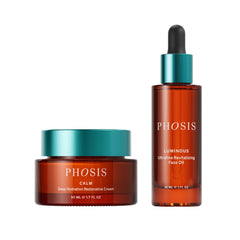
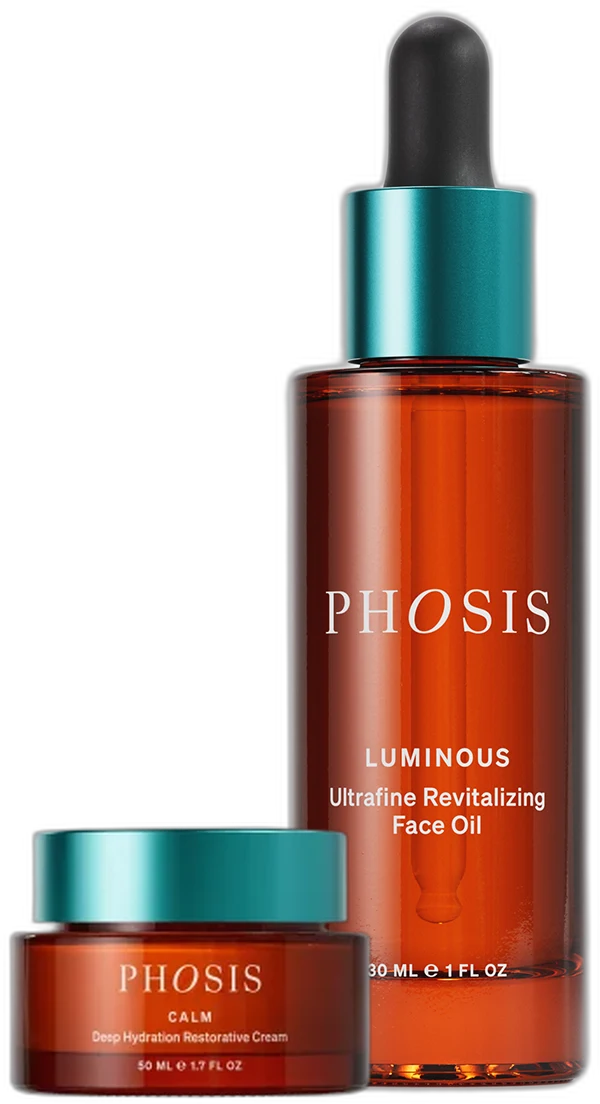
At Phosis, every formula is rigorously tested, clinically proven, hormone-safe, and created specifically for the skin changes that come with perimenopause and menopause. No estrogen, No compromise, Just stronger, more radiant skin.
Questions women like you asked
Are estrogen face creams safe?
The answer depends on your medical history. Dermatologists generally advise against them for women with hormone-sensitive conditions or elevated risk, including a history of breast, uterine or ovarian cancer. For other women, the main concerns are unknown systemic absorption, inconsistent regulation, and limited clinical evidence on facial use. It is a decision for a clinician who knows your history.
Does topical estrogen actually reduce wrinkles?
The biological rationale is sound, since estrogen influences collagen and hyaluronic acid production in skin. The clinical evidence supporting facial creams specifically is limited, with small studies, short durations and inconsistent formulations. Adoption has outpaced the evidence.
Is estriol safer than estradiol in skincare?
Estriol is a weaker estrogen than estradiol, which is why formulators favour it, but weaker is not the same as inactive or risk-free. Both are hormones, both raise questions about systemic absorption, and neither has robust long-term facial safety data. The distinction matters less than your personal risk profile.
Are phytoestrogens the same as estrogen skincare?
No. Phytoestrogens are plant compounds such as genistein and resveratrol that interact weakly with estrogen receptors. They are cosmetic ingredients, not hormones, and they carry a different and generally more favourable safety profile. If you have a hormone-sensitive history, it is still worth mentioning them to your clinician.
Can I use estrogen face cream if I've had breast cancer?
This is the clearest case for not self-prescribing. Women with a history of hormone-sensitive cancer, and anyone taking tamoxifen or an aromatase inhibitor, are among those dermatologists most consistently advise against these products. Ask your oncologist before using anything containing estriol or estradiol.
Is estrogen skincare FDA approved?
Products sold over the counter are not FDA-regulated as drugs, which means the concentration, purity and absorption are effectively unverified. Some formulations are available by prescription. The lack of oversight is one of the main reasons dermatologists urge caution.
Does estrogen cream get into your bloodstream?
Some systemic absorption is expected with any topical hormone, and the amount depends on the concentration, the formulation, the surface area treated and how often it is applied. With unregulated products, none of those variables is reliably known, which is precisely the problem.
What are the side effects of estrogen face cream?
Reported effects include melasma or hyperpigmentation, irritation from other ingredients in the base, breakouts in women prone to hormonal acne, and vascular changes such as spider veins. Any unexpected vaginal bleeding or breast change should be reported to a doctor promptly.
Is vaginal estrogen the same as estrogen face cream?
No. Low-dose vaginal estrogen is a prescribed, well-established treatment for genitourinary syndrome of menopause with its own evidence base and monitoring. An unregulated facial cream used twice daily for appearance is a different product, a different indication and a different risk conversation. Safety data for one does not transfer to the other.
What works as well as estrogen cream without the hormones?
Daily sun protection has the largest effect of anything available. Retinoids carry the deepest clinical evidence for wrinkles. Peptides, antioxidants such as vitamin C and niacinamide, and barrier lipids including ceramides, phospholipids and phytosterols improve firmness, tone and barrier strength without introducing a hormone.
Can I use estrogen skincare while on HRT?
That is specifically a question for your prescriber, since you would be adding an unquantified hormone dose on top of a carefully titrated one. Do not combine them without telling the clinician managing your hormone therapy.
How long until I see results from non-hormonal alternatives?
Barrier comfort improves within about a week. Peptide studies typically measure change at four to twelve weeks. Retinoids show texture improvement around eight to twelve weeks with firmness building over several months. Consistency matters more than the strength of any single product.
Will it sting if my skin reacts to everything?
It's formulated for reactive, compromised skin: no fragrance, no retinol, no acids. In HRIPT testing it was 100% non-irritating.
How quickly will I see a difference?
The first week is mostly relief as the stinging and tight dryness ease. The visible change builds over weeks two to eight.