Hormones don’t just influence how we feel; they fundamentally shape how our skin functions.
For women in midlife, one hormone in particular plays a starring role: estrogen. As estrogen levels begin to decline during perimenopause and continue through menopause, the skin undergoes numerous changes. Understanding why these changes happen is the first step towards revitalizing hormonally affected skin.
This is not about “anti-aging.” It’s about skin biology.
The Short Version
Estrogen receptors sit throughout your skin, in the cells that build collagen, the cells that form the barrier, the oil glands and the blood vessels. When estrogen falls, all four change behaviour at once. Collagen production slows sharply, oil and lipid production drops, the barrier stops holding water, and baseline inflammation rises while repair slows. That combination is why menopausal skin is simultaneously drier, thinner, more reactive and less firm, and why it stopped responding to products that worked for twenty years. It is a change in how the skin functions, not a change in how well you are looking after it.
Why Estrogen Matters to Skin Health
Estrogen is a regulatory hormone with direct receptors throughout the body, including the skin. These receptors are found in keratinocytes (skin barrier cells), fibroblasts (collagen and elastin-producing cells), sebaceous glands and blood vessels.
As estrogen levels decline, your skin doesn't just look different, it behaves differently.
Estrogen Decline and Collagen Loss
Collagen is the primary structural protein in the skin, responsible for firmness, strength, and resilience. Research shows that women can lose up to 30% of skin collagen within the first five years after menopause, with continued gradual decline thereafter. These changing estrogen levels translate to reduced collagen production and accelerated signs of aging. The result? Thinning skin, loss of firmness and elasticity, and fine lines become more pronounced. It’s important to note that these changes are not damage to the skin, rather they are a biological shift.
Two things are happening simultaneously, which is why the loss is so steep. Fibroblasts slow their production of new collagen, while the enzymes that clear away old collagen carry on at their usual pace. Less arriving, the same amount leaving. Ordinary aging is a slow drift; this is a step change concentrated into a few years.
It is also why the clinical research consistently finds that skin change tracks more closely with how long ago your final period was than with your age on paper. Two women of 54 can be in very different places depending on when their transition began.
Lipid Production and Barrier Integrity
One of estrogen’s lesser-known roles is its influence on lipid (oil) production in the skin.
Healthy skin relies on a well-structured lipid matrix: primarily ceramides, cholesterol, and fatty acids to maintain its moisture barrier. As estrogen declines, sebum production decreases, lipid synthesis slows, and barrier repair becomes less efficient.
These changes lead to increased dryness, heightened sensitivity, trans-epidermal water loss (TEWL), and skin that can feel tight, reactive or chronically dehydrated.
A clinical review has found that reduced ceramide levels after menopause contribute directly to epidermal barrier dysfunction. This is the mechanism behind the single most common complaint I hear: that a moisturiser goes on, feels fine for an hour, and then the tightness returns. The water is going in. The structure meant to hold it there has gaps in it.
Alongside the lipids, the skin's own hyaluronic acid content falls too, which is why menopausal skin often feels and looks drier at the same time that lines become more visible.
Loss of Firmness and Elasticity
Estrogen also supports elastin, the protein that allows skin to stretch and rebound. This protein is responsible in part for skin firmness. However, declining estrogen levels can fragment elastin fibers which leads to a weakened structural support. With less structure, skin recovers more slowly after movement or expression, thereby increasing the likelihood of fine lines. This loss of elasticity contributes to the sensation that skin feels “looser” or less resilient, even when well hydrated.
You can observe this at home. Pinch the skin on the back of your hand and let go. In your thirties it returned instantly. The delay you see now is elastin recovery, and it is one of the clearest everyday signs of the structural change underneath.
Increased Inflammation and Slower Repair
Did you know estrogen has anti-inflammatory properties and supports wound healing? As estrogen levels decline, skin may experience an increase in baseline inflammation, slower cellular turnover, and reduced antioxidant defense. Skin may heal more slowly, flush or react more easily, or become intolerant to products it once well tolerated.
The skin’s threshold changes, and skincare must change with it.
That last sentence is the one worth sitting with. A product has not changed formula. Your tolerance has changed, and the same percentage of the same acid now crosses a threshold it used to sit comfortably below.
Estrogen Is Not the Only Hormone Involved
Estrogen gets most of the attention, and it deserves it. But three others shape what you see in the mirror during this period.
Progesterone falls alongside estrogen and often earlier, and it is closely tied to sleep quality. Broken sleep means less overnight repair, and skin repairs mostly at night.
Testosterone declines more gradually. Because estrogen falls faster, the ratio between them shifts, which is why some women develop adult acne along the jawline, coarser facial hair or oilier patches at exactly the same time the rest of the face is drier than ever. Dry and breaking out is not a contradiction. It is a ratio.
Cortisol rises with the stress and disrupted sleep that so often accompany this stage. Cortisol impairs barrier repair directly, which means a difficult few months shows up as skin that stings and flushes at things it handled before.
Thyroid hormones are worth naming because thyroid conditions become more common in midlife and produce dryness, hair thinning and fatigue that look exactly like menopause. A blood test settles it.
A Rough Timeline
Every woman's version differs, but the sequence is consistent enough to be useful.
Early perimenopause, often the early forties. Hormones fluctuate rather than fall steadily. Skin becomes unpredictable, sometimes oilier, sometimes drier, with new sensitivity and occasional breakouts. Many women assume stress rather than hormones.
Late perimenopause, the years around the final period. The clearest change. Dryness becomes constant, the barrier weakens, products start stinging, and fine lines become noticeable within months rather than years.
The first five years after the final period. The steepest structural loss. Collagen falls fastest here, elasticity drops, crepiness appears on the neck and chest.
Beyond five years. The rate slows considerably. Decline continues at roughly 2% a year, which is gentler and much more modifiable by what you do.
The practical implication: the window where intervention matters most is the one most women spend deciding whether anything is actually happening.
What Each Change Looks Like in the Mirror
| Biological change | What you notice | What helps |
|---|---|---|
| Reduced collagen synthesis | Loss of firmness, lines that stay put | Peptides, sun protection, retinoids if tolerated |
| Fragmented elastin | Slow recovery after expression, looseness | Peptides, antioxidants, time |
| Lower sebum and lipid production | Constant dryness, tightness, flaking | Ceramides, phospholipids, phytosterols, facial oil |
| Higher water loss through the barrier | Tight within an hour of moisturising | Humectants sealed with lipids and an occlusive |
| Less hyaluronic acid | Skin looks drier and more lined at once | Topical hyaluronic acid on damp skin, sealed in |
| Raised baseline inflammation | Flushing, stinging, reactivity to old favourites | Fragrance-free formulas, fewer actives, barrier repair |
| Slower turnover and repair | Dullness, marks that linger | Consistency, gentle exfoliation at most weekly |
| Shifted estrogen to testosterone ratio | Jawline breakouts alongside dryness | Gentle cleansing, no stripping, patience |
Why Your Old Products Stopped Working
Almost every routine built in your thirties rests on an assumption that no longer holds: that your skin produces surplus oil which needs managing.
Foaming cleansers were designed to remove excess sebum. There is no longer excess sebum. Frequent acids were designed to speed turnover in skin that could tolerate the disruption. That tolerance has narrowed. High-strength actives were designed for a barrier robust enough to absorb the hit and recover overnight. Recovery now takes longer.
None of those products became bad. They became mismatched. The routines that work now are built on replacement rather than removal, which is a genuinely different logic, and I've set out what that looks like in practice in the routine for dry, menopausal skin.
What Can Be Measured, and What Cannot
Skin change in midlife is often discussed in terms of how things look, which makes it easy to sell anything. The measurable version is more useful.
Barrier function is assessed as transepidermal water loss with a Tewameter. Hydration in the outer layer is measured with a Corneometer. Firmness and elasticity are measured with a Cutometer, which deforms the skin and records how fast it returns. Dermal thickness can be imaged with ultrasound.
These are the instruments credible clinical trials use, including ours, and they are the reason a product can say something specific rather than something flattering. When a brand quotes a percentage improvement, it is worth asking which instrument produced it and over how many weeks.
What This Means for Skincare in Perimenopause and Menopause
Hormonal skin changes are not just superficial, they are also systemic. They require barrier first formulations for sensitive and vulnerable skin, lipid-replenishing ingredients, support for collagen and repair pathways, and low-irritation, evidence-based actives.
Aggressive exfoliation, harsh actives, and trend-driven products often backfire during this life stage. Midlife skin doesn’t need more stimulation; it needs support and targeted products created specifically for this time in life.
In order of how much difference each makes:
- Daily broad-spectrum sun protection. Ultraviolet exposure degrades collagen faster than any product rebuilds it, and this is the only intervention that prevents rather than repairs.
- Barrier repair with skin-identical lipids. Ceramides, phospholipids and phytosterols replace what estrogen decline stopped supplying.
- Low-irritation actives you can use daily. Peptides and antioxidants work without the irritation that thinning skin can no longer absorb.
- Removing what is working against you. Fragrance, foaming cleansers and frequent acids. Subtraction is half the routine at this stage.
- Sleep, protein, glucose control and not smoking. The same list that protects bone, for the same hormonal reason.
Why Phosis?
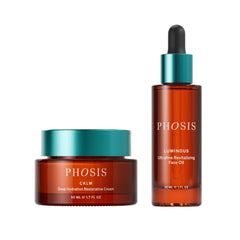
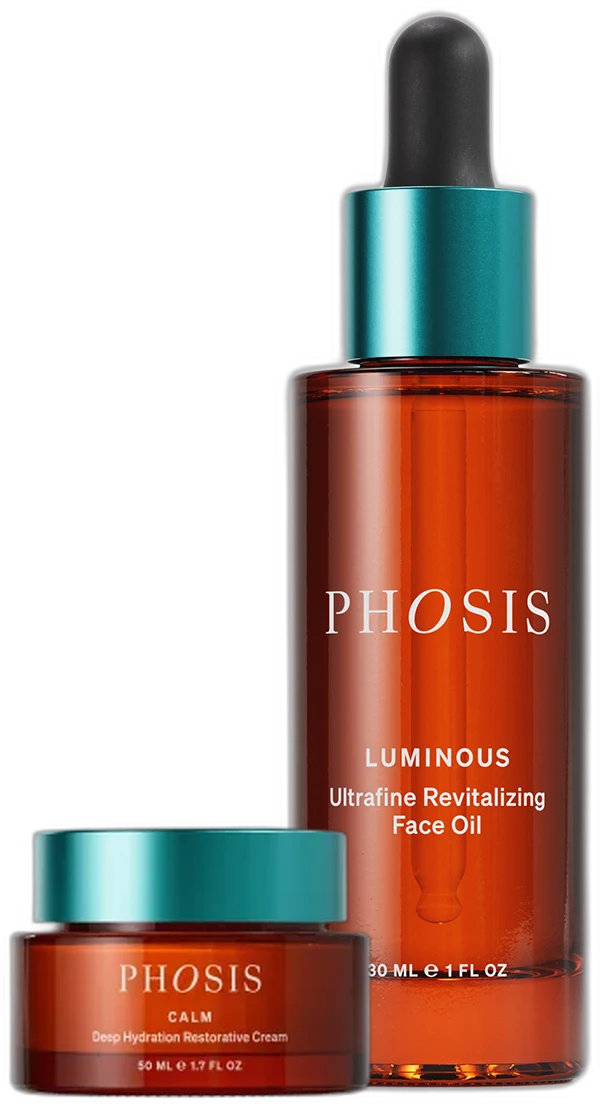
Phosis Skincare was created with these exact biological changes in mind.
Our formulations are designed to support declining lipid production, reinforce the moisture barrier, support collagen production, calm inflammation, and work with hormonally shifting skin, not against it.
Every product is developed through a clinical, evidence-based lens — because skin biology doesn’t respond to hype, fear, or false promises.
If your skin has changed and nothing seems to work the way it used to, it’s not your fault. It’s physiology. And it deserves care grounded in science.
Explore the Phosis collection to support your skin through every hormonal transition with clarity, integrity, and respect for how skin actually works.
Questions women like you asked
How does menopause change your skin?
Falling estrogen affects four things at once: fibroblasts make less collagen and elastin, sebaceous glands produce less oil, the barrier loses the lipids that hold water in, and baseline inflammation rises while repair slows. The result is skin that is drier, thinner, more reactive and less firm, and that responds differently to products than it did before.
Why does skin change so suddenly in perimenopause?
Because several systems shift within a short window rather than gradually. Collagen loss is steepest in the years around the final period, oil production drops, and ceramide levels fall, all at the same time. Change that actually takes eighteen months feels sudden compared with the slow drift of ordinary aging.
What are estrogen receptors in skin?
They are binding sites for estrogen found in keratinocytes, the barrier-forming cells, in fibroblasts, which produce collagen and elastin, in sebaceous glands and in blood vessels. Their presence is why estrogen decline changes skin function rather than simply its appearance.
How much collagen do you lose after menopause?
Research indicates up to 30% of skin collagen is lost in the first five years after menopause, with a slower decline of roughly 2% a year continuing afterwards. That early rate is around double the pace of ordinary age-related loss.
Why is my skin dry and breaking out at the same time?
Estrogen falls faster than testosterone, so the ratio between them shifts. That relative change can drive jawline breakouts, coarser facial hair or oilier patches while the rest of the face is drier than ever. It is a ratio effect, not a contradiction.
Why do products that used to work now sting?
Estrogen has anti-inflammatory properties and supports barrier integrity. As it declines, baseline inflammation rises and the barrier thins, so ingredients reach nerve endings that were previously insulated from them. The formula did not change; your tolerance did.
Is thinning skin during menopause reversible?
Premenopausal thickness is not recoverable, but barrier function, hydration, firmness and elasticity all respond to consistent treatment, and clinical studies measure improvements in these over 8 to 24 weeks. Slowing further loss is realistic and valuable at any point.
What is transepidermal water loss?
TEWL is the amount of water escaping through the skin, measured with an instrument called a Tewameter. Higher readings indicate a compromised barrier. It is one of the standard ways clinical trials verify that a product is doing what it claims rather than simply feeling nice.
Which hormones besides estrogen affect skin in midlife?
Progesterone, which is tied to sleep quality and therefore overnight repair; testosterone, whose relative rise drives breakouts and facial hair; cortisol, which impairs barrier repair during stress; and thyroid hormones, which produce dryness and hair thinning that can be mistaken for menopause.
Should I stop using retinol during menopause?
Not necessarily, but most women need a lower strength, less frequent application, and a barrier cream underneath rather than bare skin. If the barrier is currently compromised, repair it for several weeks first, then reintroduce slowly.
Is this just aging, or is it menopause?
Both, but the timing tells you which is dominant. Ordinary aging is a slow, steady decline across decades. Menopause adds a much steeper loss concentrated into a few years, and clinical studies find skin change tracks more closely with years since the final period than with chronological age.
When should I see a doctor rather than change my skincare?
If dryness arrives suddenly alongside fatigue or hair thinning, if you have persistent itching without a rash, if patches crack or weep, or if skin has become so reactive nothing is tolerated. Thyroid conditions, iron deficiency and eczema all resemble menopausal skin change and need a different answer than a better cream.
Will it sting if my skin reacts to everything?
It's formulated for reactive, compromised skin: no fragrance, no retinol, no acids. In HRIPT testing it was 100% non-irritating.
How quickly will I see a difference?
The first week is mostly relief as the stinging and tight dryness ease. The visible change builds over weeks two to eight.