On this page
The moment I realized I would never read all the books I wanted to in my lifetime was a defining one — but that hasn’t stopped me from trying. Lately, I picked up “War Paint” by Lindy Woodhead, a dual biography on the rivalry between beauty icons Helena Rubenstein and Elizabeth Arden.
I went in looking for wisdom on running a beauty business and the history of the beauty industry in the U.S., but I left reflecting on what I’d like to do differently. (If you’re here for the lip gloss, scroll to the end for four excellent products, three of which are from brands founded by women.)
Beauty Standards? Let’s Reconsider.
In the 18th century, women furiously rouged their cheeks to mimic the flush of youth. Fast forward 200 years to Victorian culture, and women were expected to wear makeup so subtle it was practically invisible—a reflection of the era’s purity ideals.

Marie Antoinette influenced women across Europe by piling on rosy rouge.
In the early 20th Century, Rubenstein and Arden capitalized on women’s insecurities, selling the idea that we’re never enough as we are. A new product, a new treatment, a new innovation—always necessary to stay youthful, competitive, and desirable. It was genius and ground-breaking marketing, but it laid the foundation for confidence-shattering claims from beauty brands for years to come. Even today, the beauty and wellness industry pushes a narrative of deficiency—promising youth, brightness, thinness — implying happiness is only a product away.
Anti-aging? Absolutely not.
I bought into this narrative for decades; continually searching for some miracle product to “fix” my skin. Not surprisingly, I never found it. So when I founded Phosis, I didn’t want to feed into the idea that women need fixing or that they aren’t “enough”. Beauty, for me, is about strength and resilience, not erasing the effects of time on our skin. That’s why we don’t sell “anti-aging” products. And striving for a face without any wrinkles is unrealistic. Rather, we focus on strength, barrier function, dryness, irritation, and texture which can be common challenges for skin during peri/menopause.
One of the most important things I’ve learned is that healthy and lovely skin is the result of many things: sleep, stress, diet, movement, and meaningful connections. That’s why we take a holistic approach — supporting both your skin and your overall wellness, especially during peri/menopause when everything feels like it's shifting.
Rivalry? No Thanks.
Rubenstein and Arden’s rivalry was rooted in a scarcity mindset — the idea that one woman’s success meant another’s failure. It’s a pattern we’ve seen in male-dominated industries for centuries. While their rivalry drove innovation in both skincare formulation and cosmetic treatments, ultimately these women spent the majority of their time trying to outdo each other without appreciating their individual success. Both women scaled their companies into global empires, which is no small feat from my perspective. And no matter how impressed I am by what they achieved, I am not interested in growing my company by tearing down others.
My journey as a founder has been shaped by women who believe in collaboration over competition. Recently I met Kari Gran of Kari Gran Skincare at an indie beauty conference, and she shared her knowledge generously. That experience solidified my belief that there’s enough success to go around and that women in peri/menopause deserve lots of different products to choose from.
Self-Expression? Always.
As I near age 50, I’m finding a newfound self-confidence that I'm exploring with clothes and makeup. These days, whether I go for a smokey eye, a bold lip, or a more natural look, makeup for me is about self-expression. As I prepare to launch Phosis next month — meeting with packaging experts, developing our website, and working closely with my team — I’ve leaned into the ritual of getting ready each morning.
If you’re curious, here are a few of my go-to products that have helped me feel polished while I’m in the middle of a whirlwind:
Self-expression comes in many forms; it’s thankfully not limited to clothing and makeup. I hope to encourage all women to consider how they want to express themselves and to try new things. After all, perimenopause and menopause are all about change — and it doesn’t need to only be about changing hormones.
Cheers to looking and feeling your best,
Susan Campbell
Founder & CEO, Phosis
Questions women like you asked
Will it sting if my skin reacts to everything?
It's formulated for reactive, compromised skin: no fragrance, no retinol, no acids. In HRIPT testing it was 100% non-irritating.
How quickly will I see a difference?
The first week is mostly relief as the stinging and tight dryness ease. The visible change builds over weeks two to eight.
Written by
Ellen Miller
MyMMT™ Certified Menopause Lifestyle Practitioner & Founder of Phosis
Susan entered perimenopause and watched the products she'd trusted for years stop working. She spent five years with cosmetic chemists building a barrier-first routine for skin in hormonal change. She writes the journal from lived experience.
Mentioned in this article
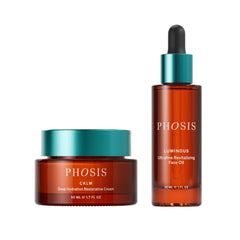
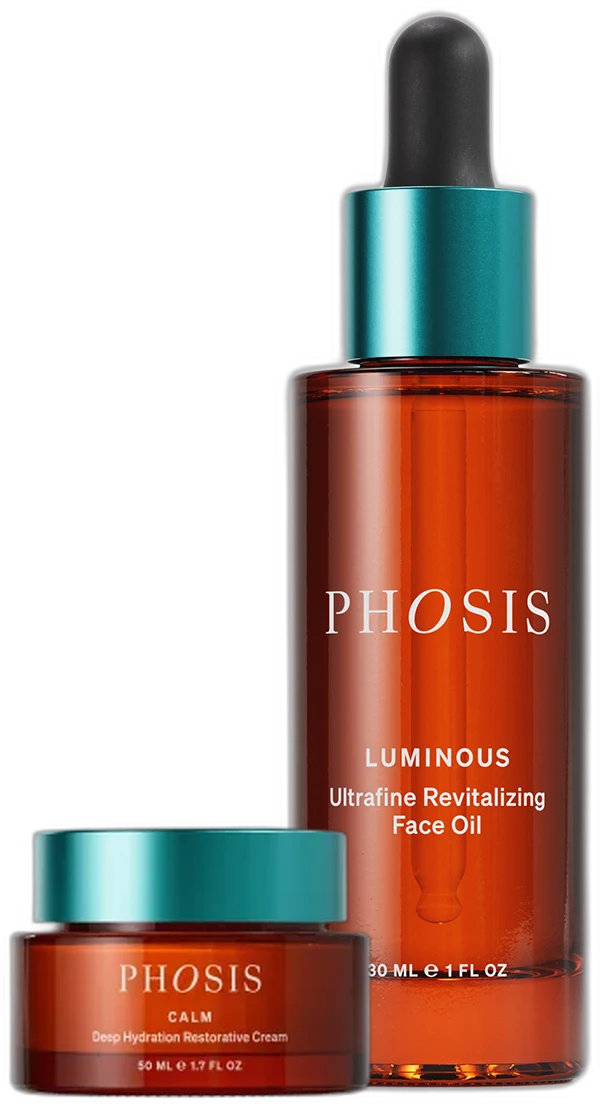
The Power Pair
Hormonally shifting skin doesn't need more products, it needs the right ones. Meet The Power Pair; science-backed formulas built for perimenopausal and menopausal skin. Calm Deep...
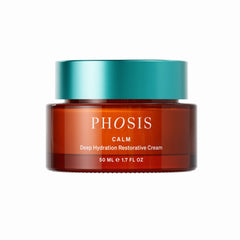
Calm
Restore what hormonal shifts take away. This science-backed, plant-based cream was formulated specifically for perimenopausal and menopausal skin to deliver deeper hydration, visible smoothness and firmness,...
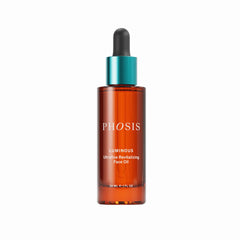
Luminous
Hormonal skin changes show up as dryness, dullness, and loss of glow. This non-greasy, antioxidant-rich face oil, powered by Vitamin C, replenishes moisture, restores radiance, and...
Join the journal
Skin guidance for the menopause years
Join 25,000+ women getting weekly, clinically grounded skincare guidance — and 15% off your first order.
No spam. Unsubscribe anytime.