Your skin isn't failing you. It's responding to real hormonal changes. Here's what's happening, and what actually helps.
If your skin has started to feel like a stranger, dryer, thinner, and more reactive than you remember, you're not imagining it. Menopause changes your skin in ways that most of the beauty industry has quietly ignored for decades.
The good news? Once you understand what's happening beneath the surface, you can do something about it. Not just manage it, but genuinely strengthen and restore your skin for long term health and vibrancy.
What Happens to Skin During Menopause?
The driving force behind most menopausal skin changes is a significant drop in estrogen. Estrogen plays an important role in skin health; it stimulates collagen production, supports the skin's ability to retain moisture, and helps maintain the protective barrier that shields your skin from the environment.
When estrogen levels decline, the effects show up across multiple layers of skin:
-
Collagen loss accelerates. Skin can lose up to 30% of its collagen in the first five years after menopause, leading to thinning and reduced firmness.
-
Natural oils decrease. Sebaceous glands become less active, depriving skin of the natural oils that keep it soft and protected.
-
Moisture retention drops. Lower estrogen reduces the skin's ability to hold onto water, leading to persistent dryness that no ordinary moisturizer seems to fix.
-
The skin barrier weakens. The outermost layer of skin becomes more permeable, making skin more reactive, sensitive, and prone to irritation.
-
The result is skin that feels dry, tight, and sensitive, often all at once. Many women also notice that the products they've used for years suddenly cause redness or irritation. That's not coincidence, a compromised skin barrier lets more irritants in, and keeps less irritants out.
The skincare industry has spent decades selling women on looking younger. What menopausal skin actually needs is to be made stronger.
Why Dryness and Sensitivity Go Hand in Hand
Most people think of dry skin and sensitive skin as separate issues. During perimenopause and menopause, they are almost always the same problem: a weakened skin barrier.
Think of your skin barrier like a brick wall. The "bricks" are your skin cells, and the "mortar" holding them together is made up of natural lipids, fats that keep moisture locked in and irritants blocked out. When estrogen drops, the production of these lipids slows down, the mortar crumbles, and the brick wall becomes porous.
When skin barrier is compromised, moisture escapes continuously, which is why your skin care feel dry or tight even right after moisturizing. Now, because the barrier is no longer doing its job of keeping things out, environmental irritants, fragrance, and even active skincare ingredients can trigger a reaction.
This is why strengthening the barrier, not just laying on another moisturizer, is the most important thing you can do for menopausal skin.
Actionable Tips for Menopausal Skin
Switch to a gentle, oil-based cleanser. Foaming cleansers strip what little natural oil your skin still produces. Oil-based formulas clean without compromising your barrier.
-
Apply moisturizer to damp skin. Applying while skin is still slightly damp helps seal in moisture before it evaporates.
-
Cut out fragrance and alcohol. These are among the most common triggers for reactive, weakened skin. Check your labels carefully.
-
Simplify your routine. Less is genuinely more. Fewer products means fewer potential irritants and more chance to strengthen your barrier.
-
Don't skip SPF. Thinner skin is more vulnerable to UV damage. A mineral SPF with zinc oxide is the gentlest option for sensitive skin.
-
Drink water, but don't rely only on it. Hydration helps from the inside, but true barrier repair requires topical ingredients that rebuild the lipid layer directly.
Ingredients that Actually Strengthen Menopausal Skin
When it comes to menopausal skin, the ingredients that matter most are the ones that rebuild and strengthen the skin barrier from the ground up, not just temporarily plump it with surface hydration.
-
Ceramides. The primary lipids in your skin barrier. Ceramide levels drop significantly with age and hormonal change. Topical ceramides directly replenish what's been lost, helping the barrier hold in moisture.
-
Phytosterols. Plant-derived compounds that closely mimic the skin's own natural lipids. They support barrier repair, calm inflammation, and help regulate how the skin responds to irritants.
-
Phospholipids. Key components of healthy cell membranes, phospholipids help restore the skin's natural structure, improving moisture retention and resilience over time.
-
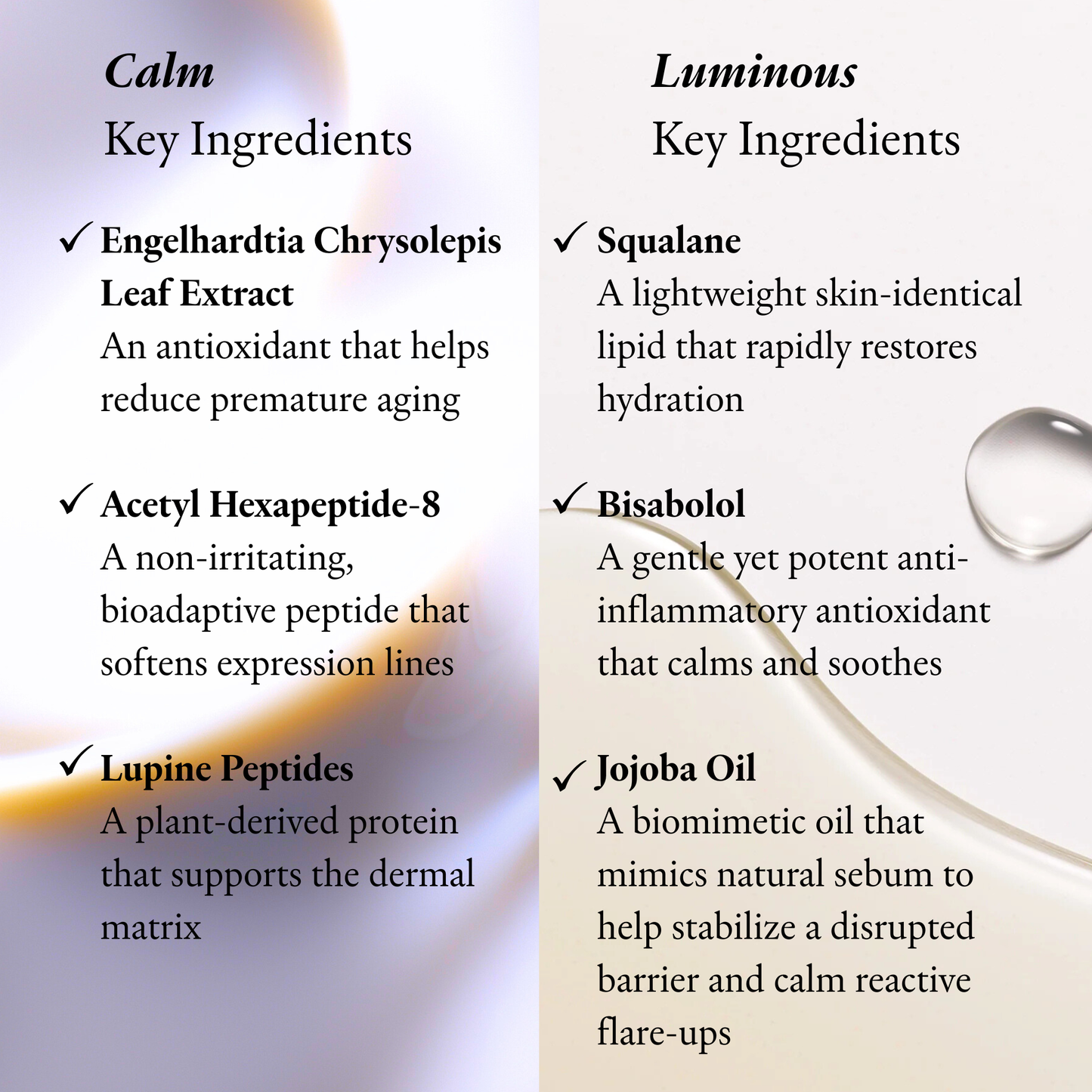
Squalane. A lightweight, non-comedogenic oil that replenishes the natural sebum your skin produces less of during menopause, without clogging pores or feeling greasy.
Equally important is what you avoid: parabens, phthalates, and some fragrances are endocrine disruptors, meaning they can interfere with the hormonal systems already under pressure during menopause. For skin that's already struggling with hormonal shifts, adding endocrine disruptors to your routine is working against yourself.
Strength, Not Just Softness
Most skincare products promise hydration. Fewer promise what menopausal skin actually needs: resilience. A barrier strong enough to protect you, hold moisture on it's own, and respond less to the irritants around you.
Your skin doesn't need to be managed in this stage of life, it needs strength and resilience to maintain health and vibrancy. With the right information, all women can rebuild and strengthen their skin and enjoy radiant, healthy skin throughout all the stages of menopause.